
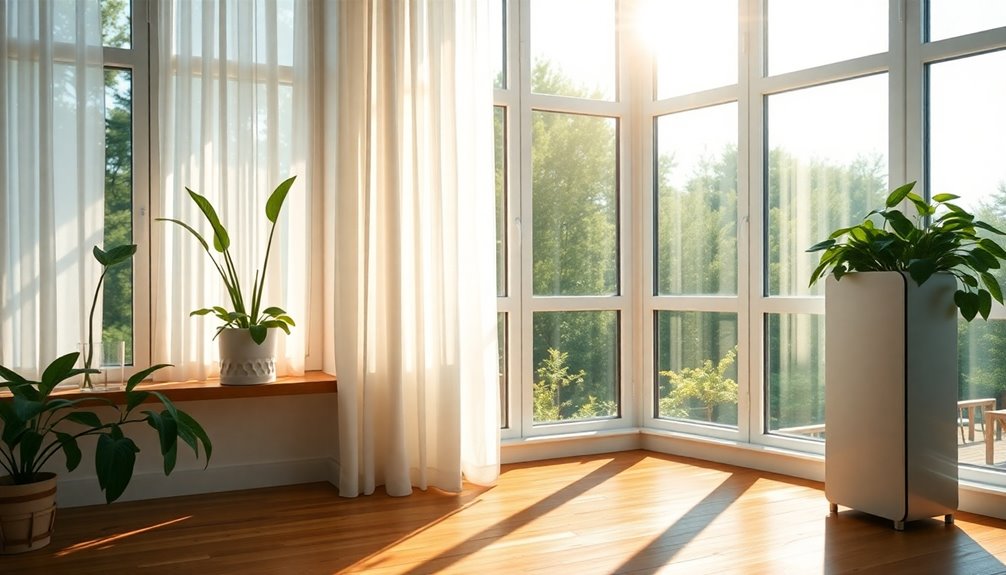
Improving indoor air quality starts with better ventilation. When you maintain fresh air circulation, you reduce harmful pollutants and allergens, promoting better respiratory health. Open windows, use exhaust fans, and consider air purifiers for ideal results. Monitor for signs of moisture or persistent odors that indicate inadequate ventilation. These small changes can transform your living space into a healthier environment. Discover more about effective strategies for enhancing air quality and creating a nurturing home atmosphere.
Article Highlights
- Regularly opening windows allows fresh air circulation, improving indoor air quality and reducing pollutants.
- Use exhaust fans in kitchens and bathrooms to effectively remove stale air and excess moisture.
- Invest in air purifiers to eliminate allergens, bacteria, and odors, enhancing overall air quality.
- Monitor indoor air quality to identify issues early and ensure effective ventilation systems are in place.
- Tailor ventilation systems to your living space for optimal air circulation and moisture control.
How Poor Ventilation Affects Your Health
When you spend long hours in a poorly ventilated space, you might not realize how it can negatively impact your health. The air you breathe can be filled with airborne pollutants, which may lead to various respiratory issues. You might feel more fatigued, experience headaches, or find it hard to concentrate. These symptoms can make you feel isolated, as if you’re not part of an environment that supports your well-being. It’s crucial to understand that you’re not alone in this struggle; many face similar challenges. By acknowledging the significance of fresh air and better ventilation, you can take a step in the direction of creating a healthier space where everyone feels connected and comfortable. Improving indoor air quality benefits all, cultivating a sense of belonging.
Signs You Need Better Indoor Ventilation
If you notice persistent odors lingering in your home or see excessive moisture buildup on surfaces, it’s time to contemplate your indoor ventilation. These signs can indicate that your space isn’t getting the fresh air it needs. Improving airflow can make a significant difference in your indoor air quality.
Persistent Odors In Home
Sometimes, it’s easy to overlook the signs that your home needs better ventilation, especially when persistent odors linger in the air. You might notice unpleasant smells from various odor sources, like cooking, pets, or mildew. If you’re relying on air fresheners to mask these odors, it’s a temporary fix that doesn’t solve the underlying problem. Without proper ventilation, these smells can become trapped, making your home feel less inviting. You deserve a space that feels fresh and welcoming, where you can truly relax. Consider opening windows or using exhaust fans to improve air circulation. By addressing these persistent odors, you’ll create a more comfortable atmosphere for yourself and your loved ones.
Excessive Moisture Accumulation
Excessive moisture accumulation can quietly wreak havoc in your home, leading to a host of problems like mold growth and damage to your walls and furnishings. You might notice condensation on windows, musty odors, or even peeling paint—these are signs you need better indoor ventilation. By improving humidity control, you create a healthier environment for you and your family. Good ventilation helps prevent mold, which can affect your well-being and the comfort of your home. Consider using exhaust fans in kitchens and bathrooms, or even a dehumidifier, to tackle moisture issues. Remember, a well-ventilated home is not just about air quality; it’s about creating a safe, welcoming space where everyone can thrive together.
Easy Ways to Ventilate Your Home
To boost your home’s ventilation, you can start by opening windows regularly to let fresh air in. Using exhaust fans in kitchens and bathrooms likewise helps remove stale air and odors. Furthermore, installing air purifiers can further improve indoor air quality by filtering out pollutants.
Open Windows Regularly
Even though many overlook the simplest solutions, opening your windows regularly is one of the easiest ways to improve indoor air quality. Letting in fresh air can quickly elevate the atmosphere in your home and create a sense of belonging, making it feel more inviting. Outdoor breezes not just refresh your space but likewise help to dilute indoor pollutants, keeping your family healthier and happier. Just a few minutes each day can make a big difference. So, whether you’re sipping coffee in the morning or winding down at night, take a moment to let those outdoor breezes flow through your home. You’ll feel the difference, and your living space will be more pleasant for everyone who walks through your door.
Use Exhaust Fans
Exhaust fans can be a transformative element regarding improving ventilation in your home. They help remove stale air, moisture, and pollutants, making your space more inviting and comfortable. To get the most out of your exhaust fans, consider these tips:
- Choose the right exhaust fan types for your needs, like bathroom, kitchen, or whole-house fans.
- Place your fans strategically near sources of humidity, such as showers or stoves.
- Run your fans regularly, especially during cooking or after showering, to keep air fresh.
- Maintain your fans by cleaning them to guarantee they operate efficiently.
Install Air Purifiers
Installing air purifiers can make a significant difference in your home’s air quality. These devices come in various air purifier types, including HEPA, activated carbon, and UV models, each suited for different needs. When choosing the right one for your space, consider the size and specific pollutants you want to target.
Follow the installation guidelines closely to guarantee peak performance. Place your purifier in areas where you spend the most time, like the living room or bedroom. Don’t forget to regularly change filters to maintain efficiency.
The Benefits of Air Purifiers for Indoor Air Quality
When you think about improving your indoor air quality, air purifiers often come to mind as one of the most effective solutions. With various air purifier types available, you can find the right one to fit your needs. By integrating an air purifier into your space, you can enjoy several air quality benefits, making your home a healthier environment for you and your loved ones.
- Reduce allergens like dust and pollen
- Eliminate harmful bacteria and viruses
- Minimize odors from pets and cooking
- Improve overall comfort and well-being
Investing in an air purifier not only helps you breathe easier but likewise contributes to a sense of community and connection by creating a safe haven for your family and friends.
Natural vs. Mechanical Ventilation: Which Is Right for You?
Whether you prioritize energy efficiency or fresh air flow, choosing between natural and mechanical ventilation can profoundly impact your indoor air quality. Natural ventilation benefits include improved airflow and reduced energy costs, making your space feel fresh and inviting. It’s a great way to connect with the outdoors and promote a sense of community in your home. Nevertheless, keep in mind that it can be unpredictable, depending on weather conditions. Conversely, mechanical ventilation guarantees a consistent air exchange but has its drawbacks, like higher energy consumption and potential noise issues. Ultimately, your choice should reflect your lifestyle needs and values, as both options can improve your indoor environment in different ways.
Maintenance Tips for Your Home’s Ventilation System
To guarantee your home’s ventilation system runs efficiently and effectively, regular maintenance is crucial. Staying on top of this not just improves air quality but likewise makes your home a more welcoming space. Here are some key tips to help you maintain your system:
- Create a filter replacement schedule; changing filters every 1-3 months keeps air clean.
- Inspect ducts for leaks and blockages to confirm peak airflow.
- Clean vents and registers regularly to prevent dust accumulation.
- Schedule professional maintenance yearly to identify potential issues early.
Creating a Healthier Living Environment: A Summary
Creating a healthier living environment involves more than merely improving your home’s air quality; it means cultivating a space that promotes overall well-being. By focusing on effective ventilation systems, you can improve the air quality in your home, making it a sanctuary for you and your loved ones. Proper ventilation reduces indoor pollutants, helps control humidity, and allows fresh air to circulate, creating a comfortable atmosphere. Remember, a well-ventilated home not just supports physical health but additionally nurtures emotional connections with those who share your space. Take the time to invest in your ventilation systems and prioritize air quality; together, they’ll transform your living environment into a nurturing haven where everyone feels safe and at home. Additionally, well-presented homes boost market value and attract potential buyers, reinforcing the importance of maintaining a healthy living space.
Frequently Asked Questions
What Are the Main Sources of Indoor Air Pollution?
They say, “What you can’t see can hurt you.” Indoor air pollution often comes from smoke particles, volatile organic compounds (VOCs), and household items like cleaners and paints. These pollutants can linger, causing discomfort and health issues. You might not realize it, but everyday activities—like cooking or using personal care products—contribute to this hidden problem. Being mindful of these sources can help you create a healthier environment for yourself and your loved ones.
How Often Should I Ventilate My Home?
You should aim to ventilate your home at least once every hour, especially in areas like kitchens and bathrooms where moisture and pollutants gather. Regular air exchange helps maintain a healthier environment, reducing dust, allergens, and odors. If you’re in a climate with extreme temperatures, consider adjusting your ventilation frequency to suit your comfort. By keeping the air fresh, you’re creating a welcoming space for yourself and your loved ones.
Can Plants Improve Indoor Air Quality?
Yes, plants can definitely improve indoor air quality! Air purifying plants like snake plants, peace lilies, and spider plants not just elevate the aesthetics of your space but additionally help filter toxins from the air. Incorporating indoor greenery can create a calming environment, making your home feel more inviting and connected. Plus, nurturing these plants gives you a sense of accomplishment and belonging, cultivating a deeper connection with your living space.
What Humidity Levels Are Ideal for Indoor Air Quality?
Think of your indoor space as a cozy blanket—too dry or too damp, and it loses its warmth. The ideal humidity for indoor air quality hovers between 30% and 50%. Keeping this balance can help you breathe easier and feel more at home. With proper humidity control, you’ll create a sanctuary where you and your loved ones can thrive. So, embrace this sweet spot and enjoy a healthier atmosphere together!
Are There DIY Methods to Check Air Quality?
Absolutely, you can use simple DIY methods to check air quality. For instance, you can test for carbon dioxide levels using a homemade soda bottle and a pH indicator solution. Another method involves observing indoor plants—if they’re struggling, it might indicate poor air quality. You could as well invest in affordable air quality testing kits that measure pollutants. These methods not just help you feel connected to your space but empower you to take control of your environment.