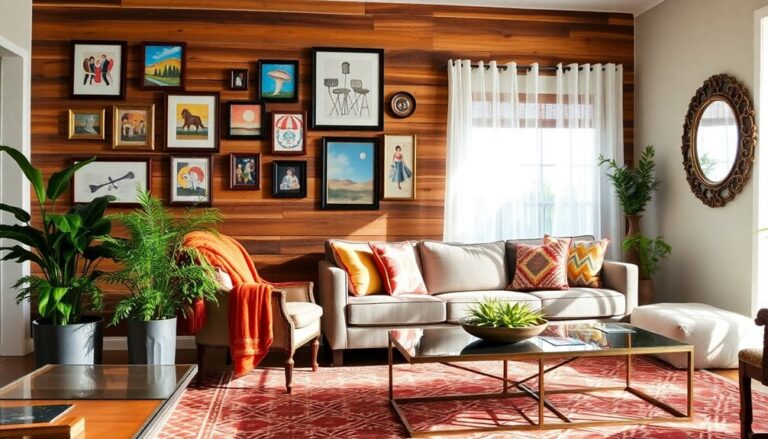

To make your rooms feel bigger, focus on light paint colors like pale blues, soft greens, and light grays. These hues reflect natural light, creating an airy atmosphere. Although dark colors can add depth, they work best when balanced with good lighting and soft textures. Consider using bold accent colors for dimension without overwhelming the space. By observing colors in different lighting, you’ll better understand how to improve your room’s perception. There’s more to discover about optimizing your space!
Article Highlights
- Opt for light colors like pale blues, soft greens, and light grays to create an airy and spacious atmosphere.
- Use neutrals such as creamy whites or beige to provide warm backdrops that enhance the sense of openness.
- Incorporate accent colors on feature walls to add depth without overwhelming the room’s overall feel.
- Ensure good lighting, as natural light amplifies lighter hues, making spaces feel more expansive.
- Balance dark colors with soft textures and ample lighting to maintain comfort while creating an intimate atmosphere.
Why Color Matters in Your Space
Color has a profound impact on the atmosphere of your space. It can shape how you feel and interact within your environment. By comprehending color psychology, you can create a sense of belonging and comfort. For instance, warm colors like reds and yellows might energize you, whereas cool tones like blues and greens can promote calmness. The colors you choose influence spatial perception, making a room feel cozy or expansive. If you want your space to feel inviting and open, consider how different hues interact with light and furniture. In the end, selecting the right colors can transform your home into a sanctuary where you feel truly connected and at ease. Embrace the influence of color to improve your living experience!
Best Light Paint Colors for Expanding Space
When you’re looking to make a big room feel even more spacious, choosing the right light paint colors is essential. Light color psychology suggests that soft hues can create an airy atmosphere, making your space feel larger and more welcoming. Consider shades like pale blues, soft greens, and light grays; these are some of the best light shades for broadening your room. They reflect natural light beautifully, enhancing the sense of openness. Neutrals like creamy whites or beige can likewise provide a warm, inviting backdrop. Remember, the right light colors not only brighten your space but additionally promote a sense of belonging, making your home feel like a true sanctuary for you and your loved ones.
Choosing Dark Paint Colors for Small Spaces
While light colors can improve spaciousness, dark paint colors can likewise work wonders in small spaces by adding depth and drama. Embracing dark color psychology, you can create an inviting atmosphere that feels intimate and cozy. When you choose deep hues like navy or charcoal, you’re not just making a bold statement; you’re enhancing small space aesthetics by drawing the eye inward, creating a sense of comfort and warmth. These colors can highlight your furniture and décor, giving your room character. To make the most of dark shades, balance them with soft textures and good lighting. This way, you’ll cultivate a space that feels both stylish and welcoming, making it a true reflection of your unique personality.
Using Accent Colors to Enhance Space in Small Rooms
When you’re working with small rooms, using accent colors can really make a difference. By strategically placing these colors, you can create the illusion of more space and highlight your room’s best features. Choosing complementary colors will not just improve the overall aesthetic but additionally help tie the room together beautifully.
Strategic Color Placement
Even though you might think that small rooms require light colors to feel spacious, strategically placing accent colors can actually improve the sense of space. By leveraging color psychology, you can create visual depth, making your room feel larger and more inviting. Here are three tips for effective accent color placement:
- Feature Walls: Paint one wall in a bold color to draw the eye, adding dimension without overwhelming the space.
- Furniture Accents: Use colorful cushions or throws on neutral furnishings to introduce warmth and personality.
- Artwork: Hang lively pieces that resonate with your style; they can serve as focal points, enhancing the room’s overall appeal.
Complementary Color Choices
Choosing complementary colors can greatly improve the perception of space in small rooms. By grasping color theory, you can create visual harmony that makes your space feel larger and more inviting. Consider pairing soft pastels with bolder accent colors, like a light blue with bright orange pillows. This contrast not only adds depth but likewise draws the eye around the room, enhancing the sense of openness. You’ll find that these thoughtful combinations make your space feel cohesive and welcoming, nurturing a sense of belonging. Remember, it’s all about balance—too many bold colors can overwhelm. So, by carefully selecting complementary hues, you can transform your small room into a spacious retreat you’ll love to share with friends and family.
How Lighting Affects Your Color Choices
Since different lighting can dramatically alter how paint colors appear, it’s crucial to reflect on your room’s lighting before making a final decision. Both natural light and artificial light can influence how colors are perceived, affecting your space’s overall vibe. Here are three key points to take into account:
- Natural Light: This can improve softer hues, making them feel airy and spacious.
- Artificial Light: The type of bulbs you use can warm or cool colors, which can change the room’s atmosphere.
- Time of Day: Observe how colors look at various times, as sunlight shifts can dramatically change your room’s appearance.
Tips for Testing Paint Colors Before Committing
How can you be sure a paint color is right for your bigger room before making a commitment? Start by grabbing some sample swatches. This isn’t just about picking a pretty shade; it’s an exploration into color psychology. Each hue can evoke different feelings and alter the perception of space. Paint a few large patches on your walls and observe them at various times of day. Notice how the light changes their appearance, and see which colors resonate with your style and make the room feel more open. Don’t rush; take your time to live with the colors for a few days. This way, you’re not just choosing a color—you’re creating a space that feels like home.
Frequently Asked Questions
Can Specific Paint Finishes Also Affect the Perception of Space?
Absolutely, specific paint finishes can definitely affect how you perceive space. Matte finishes absorb light, creating a cozy, intimate feel, whereas glossy finishes reflect light, making a room feel more open and airy. If you’re aiming for a spacious vibe, consider using glossy finishes on your walls. It can brighten up the area and improve the feeling of openness, making your home feel more inviting and welcoming to both you and your guests.
How Does Furniture Color Impact the Feel of a Room?
Furniture color plays a huge role in how a room feels. If you use light-colored furniture, it can create a sense of openness, especially when paired with a similar wall color. Conversely, darker furniture can make a space feel cozier but might close it in. Mixing styles and using color contrast can add visual interest, making the room feel inviting and stylish. It’s all about balancing comfort and spaciousness to create your perfect haven.
What Role Do Wall Textures Play in Room Perception?
Wall textures can greatly impact how you perceive a room. You might’ve heard that smooth surfaces create a sense of openness, whereas rough textures can add warmth and visual depth. This theory’s true; textured walls can draw the eye, making spaces feel both cozy and inviting. By choosing the right wall texture, you can improve your home’s atmosphere, ensuring it feels like a place where you truly belong and can relax.
Should I Consider the Ceiling Color When Painting a Small Room?
Absolutely, you should consider the ceiling color when painting a small room. Lighter colors help create the illusion of height, making the space feel more open. Plus, a bright ceiling can improve light reflection, adding to that airy vibe you’re aiming for. If you match or slightly lighten the ceiling color, it’ll blend seamlessly with the walls, helping your room feel more connected and inviting. You’ll love how spacious it can feel!
How Often Should I Repaint to Maintain an Open Feel?
You should aim to repaint every 5 to 7 years to keep that open feel in your space. Regular room maintenance helps prevent wear and tear, ensuring your colors stay fresh and inviting. Of course, if you notice fading or scuffs sooner, don’t hesitate to touch up. It’s all about creating a welcoming atmosphere that feels cozy and spacious, making sure your home reflects your style and warmth.