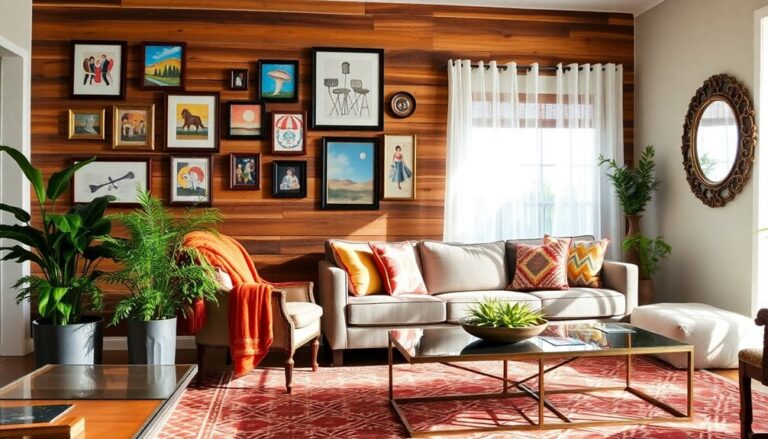

Choosing the right lighting for every room involves comprehending its function. For a cozy living room, mix ambient and accent lighting. In kitchens, prioritize task lighting for efficiency. Bedrooms benefit from soft, flattering lights, whereas bathrooms need layered lighting for both brightness and ambiance. Don’t forget outdoor lights for safety and style. By considering these basics, you can create an inviting space. Discover more tips to improve your home’s lighting further.
Article Highlights
- Assess the room’s functionality to determine the appropriate mix of ambient, task, and accent lighting for optimal use.
- Choose lighting fixtures that complement the room’s color palette and decor style to enhance visual appeal.
- Incorporate dimmable options to allow flexibility in brightness levels, adapting the atmosphere for different activities.
- Maximize natural light sources where possible, as they improve overall brightness and mood in the room.
- Layer different lighting types to create depth and warmth, transforming the space into a comfortable and inviting environment.
Understanding Different Types of Home Lighting
When you’re choosing lighting for your home, it’s vital to understand the different types available. Each type can create unique atmospheres and improve your sense of belonging. You’ll find ambient lighting, which fills a space with a warm glow, perfect for cozy gatherings. Task lighting is important for focused activities, like reading or cooking. Accent lighting adds character, highlighting art or architectural features. With advancements in lighting technology, you can likewise explore options like LED bulbs that offer incredible energy efficiency, saving you money as well as being environmentally friendly. By selecting the right mix of these lighting types, you’ll create an inviting environment that feels just right for you and your loved ones. Embrace the warmth and joy that great lighting can bring!
Assessing Lighting Needs Based on Room Functions
When you’re planning your lighting, think about how each room will be used. Task lighting is essential for areas where you need to focus, whereas ambient lighting sets the overall mood. Don’t forget about accent lighting—it can highlight your favorite features and add depth to your space.
Task Lighting Requirements
How do you determine the right task lighting for each room in your home? Start by evaluating the functions of each space. Different activities require different levels of illumination, so consider these task lighting styles and materials to create a welcoming environment:
- Adjustable desk lamps for focused work areas
- Under-cabinet lighting in the kitchen for meal prep
- Pendant lights over your dining table for cozy evenings
- Wall-mounted sconces beside your reading nook for easy access
- Bright LED strips in your craft room for detailed projects
Ambient Lighting Importance
Even though task lighting focuses on specific activities, ambient lighting sets the overall mood and feel of a room, making it vital for creating a comfortable atmosphere. You want your spaces to feel welcoming, and choosing the right ambient lighting styles can help achieve that. Soft, warm light can promote relaxation, whereas brighter, cooler tones can energize a space. The benefits of ambient lighting extend beyond aesthetics; it improves the functionality of your rooms, ensuring they feel inviting and cohesive. When you assess your lighting needs, think about how you want to feel in each area. By integrating ambient lighting thoughtfully, you’ll create a sense of belonging that transforms your home into a sanctuary for you and your loved ones.
Accent Lighting Considerations
As ambient lighting creates a cozy backdrop, accent lighting adds depth and personality to your space by highlighting specific features or areas. When you’re considering accent lighting, think about how you can improve your environment and cultivate a sense of belonging. Here are some ideas to get you started:
- Use wall sconces to frame beautiful artwork.
- Install spotlights to illuminate your favorite sculptures.
- Add table lamps to create intimacy around seating areas.
- Use LED strips to highlight architectural features.
- Incorporate candles for a warm, inviting glow.
How to Choose Ambient Lighting for Your Living Room?
In relation to creating a cozy atmosphere in your living room, selecting the right ambient lighting is essential. You’ll want to reflect on various ambient lighting styles that complement your living room colors. Soft, warm tones can make the space feel inviting, whereas brighter options can energize it. Here’s a quick guide to help you choose the perfect lighting:
| Ambient Lighting Style | Best For Living Room Colors |
|---|---|
| Floor Lamps | Neutral and pastel shades |
| Chandeliers | Bold colors |
| Wall Sconces | Earth tones |
| Table Lamps | Dark hues |
| Recessed Lighting | All color palettes |
Selecting Task Lighting for Your Kitchen and Workspace
In terms of task lighting in your kitchen and workspace, finding the right brightness levels is essential for efficiency and comfort. You must also consider fixture placement to guarantee you’re illuminating the areas where you need it most. Let’s explore how to optimize both for a functional and inviting space.
Ideal Brightness Levels
How do you determine the ideal brightness levels for your kitchen and workspace? Finding the right balance is key to creating a welcoming environment that suits your brightness preferences. Consider these factors:
- Task areas: Bright, focused light for chopping or reading recipes.
- Ambient lighting: Soft light to create a cozy atmosphere during meals.
- Light color: Warm tones for relaxation; cooler tones for alertness.
- Adjustability: Dimmable options let you tailor brightness as needed.
- Natural light: Take advantage of windows to improve brightness throughout the day.
Fixture Placement Strategies
Where should you position your task lighting to maximize efficiency in the kitchen and workspace? Start by considering the fixture height; you want it low enough to illuminate your tasks without creating shadows. For instance, pendant lights above kitchen islands should hang about 30-36 inches above the countertop.
Next, think about fixture style. A sleek, modern fixture can improve your workspace’s aesthetics as well as providing focused light for meal prep or projects. Under-cabinet lighting is a fantastic choice, as it brightens countertops without taking up space.
Ultimately, you want your lighting to be both functional and to create a warm, welcoming environment that makes you feel right at home.
Using Accent Lighting to Enhance Home Lighting in Bedrooms
Ever wondered how to create a cozy, inviting atmosphere in your bedroom? Accent lighting can transform your space, enhancing the bedroom ambiance and making it feel more personal. Consider adding decorative fixtures that reflect your style and warmth. Here are some ideas to inspire you:
- Soft wall sconces for gentle illumination
- Elegant table lamps to create intimate reading nooks
- String lights draped over a headboard for a whimsical touch
- An illuminated artwork to showcase your personality
- LED strips under furniture for a modern flair
Best Lighting Practices for Your Bathroom
When you’re designing the perfect bathroom lighting, it is crucial to strike a balance between functionality and ambiance. Your space should feel inviting and comfortable, reflecting your unique style. Consider the bathroom color and choose fixture styles that complement it beautifully.
| Fixture Style | Vibe |
|---|---|
| Modern LED sconces | Sleek and contemporary |
| Vintage pendant lights | Warm and nostalgic |
| Elegant chandeliers | Luxurious and chic |
Aim for layered lighting: overhead lights for general brightness, sconces for flattering illumination, and accent lights to create a soothing atmosphere. This thoughtful approach not only improves your space but cultivates a sense of belonging, making your bathroom a true retreat.
Outdoor Lighting Tips for Homes: Curb Appeal and Security
In the process of enhancing your home’s curb appeal, effective outdoor lighting additionally plays a crucial role in ensuring security. Thoughtfully chosen outdoor lighting not just beautifies your space but also makes it safer for you and your loved ones. Here are some tips to take into account:
- Use pathway lights to illuminate walkways and guide guests safely.
- Install motion-sensor lights around entrances for added security features.
- Highlight architectural details with spotlights to create an inviting atmosphere.
- Incorporate string lights on patios for a warm, welcoming feel.
- Choose solar lights for energy efficiency and easy installation.
With these outdoor lighting ideas, you’ll create a cozy ambiance while improving security, making your home a cherished gathering spot for family and friends.
Layering Lighting for Maximum Effect
Building on the importance of outdoor lighting for both aesthetics and security, layering lighting in your home can greatly elevate its overall ambiance and functionality. By combining different sources, you create layered textures that improve various lighting moods.
Here’s a simple way to visualize this concept:
| Layer | Purpose |
|---|---|
| Ambient Lighting | General illumination |
| Task Lighting | Specific activities |
| Accent Lighting | Highlight features |
| Decorative Lighting | Add personality and warmth |
Using these layers, you can transform a space from dull to inviting, providing comfort and a sense of belonging. So, experiment with different combinations to find the perfect balance for your home!
Top 5 Mistakes to Avoid in Home Lighting Design
Lighting can transform a space, but many homeowners make critical mistakes that compromise both aesthetics and functionality. To help you create a warm, inviting atmosphere, here are the top five common lighting mistakes to avoid:
- Neglecting Layered Lighting: Relying solely on one light source can leave your room feeling flat.
- Ignoring Scale and Proportion: Oversized fixtures in small spaces can overwhelm, whereas tiny lights can get lost.
- Overlooking Dimming Options: Without dimmers, you miss out on adjusting ambiance for different occasions.
- Focusing Only on Brightness: It’s not just about light; consider color temperature for warmth.
- Forgetting About Task Lighting: Confirm you have adequate lighting for specific activities, like reading or cooking.
Steering clear of these lighting design pitfalls will aid you in creating a harmonious home.
Frequently Asked Questions
What Color Temperature Is Best for Different Rooms?
For cozy spaces like living rooms, aim for a warm color temperature around 2700K to create inviting ambient lighting. In kitchens or workspaces, go for cooler temperatures around 4000K to improve task lighting, making it easier to see details. Bedrooms can benefit from a soft, warm hue, whereas bathrooms might need a brighter, cooler light for grooming. Balancing these will help you feel comfortable and at home in every room!
How Do I Determine the Right Wattage for My Fixtures?
To determine the right wattage for your fixtures, start with a wattage calculation based on the size of the room and the intended use. Check the fixture compatibility, as each one has a maximum wattage limit. Typically, 100 watts is good for larger spaces, whereas 60 watts works for smaller areas. It’s all about creating a cozy atmosphere that feels just right for you and your loved ones.
Can I Use Smart Bulbs in Existing Fixtures?
Absolutely, you can use smart bulbs in existing fixtures! It’s like upgrading your home to the future in an instant. Just check for smart bulb compatibility with your fixture types. Most standard lamps and ceiling lights are compatible, but be sure to verify the wattage and design before you buy. Embracing smart lighting not just improves your space but additionally brings you into a community of innovative home enthusiasts.
How Often Should I Change My Light Bulbs?
You should change your light bulbs every 1 to 2 years, depending on their type and usage. LED bulbs have a longer lifespan, lasting up to 25,000 hours, whereas incandescent bulbs might merely last about 1,000 hours. It’s helpful to set a changing schedule to keep track, ensuring you always have bright, functional lighting. Regularly updating your bulbs not just improves your space but additionally creates a welcoming atmosphere for everyone.
What Are the Benefits of LED Lighting Over Traditional Bulbs?
You’ll find that LED lighting outshines traditional bulbs in many ways. Whereas traditional bulbs drain energy and cost you more over time, LEDs are champions of energy efficiency and cost savings. You’ll not just lower your electricity bills but additionally enjoy a longer lifespan for your bulbs. Plus, with a range of styles, you can create a warm, welcoming atmosphere that makes everyone feel at home. Isn’t it time to make the switch?