
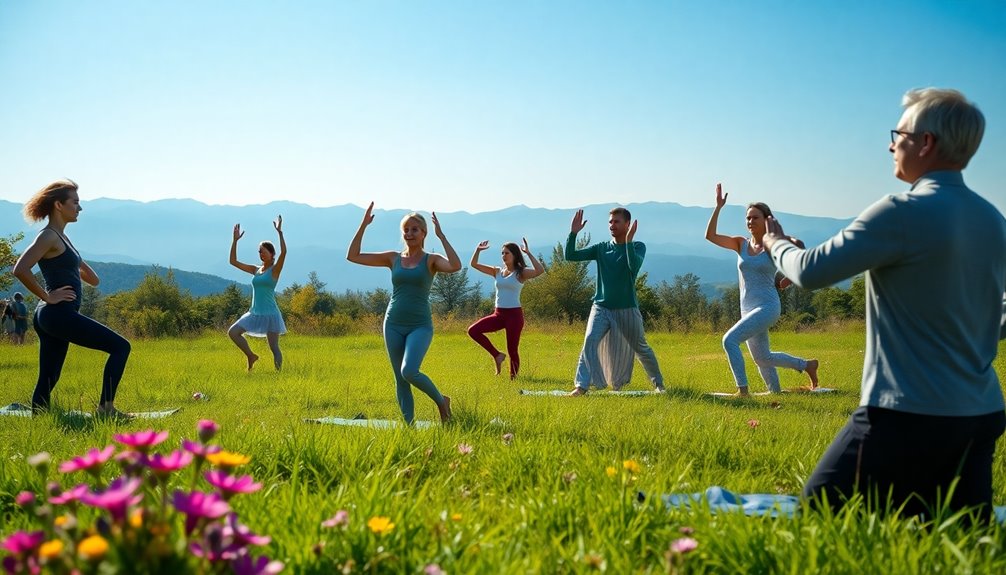
Mindful movement practices, such as yoga, tai chi, and dance, greatly improve lasting vigor by connecting the body and mind. Yoga promotes breath awareness and strength, whereas tai chi enhances balance and body awareness through slow, intentional movements. Dance encourages emotional expression and fitness through rhythmic engagement. Incorporating these practices into daily life nurtures well-being and resilience. Those curious about maximizing the benefits of mindful movement will discover even more transformative insights ahead.
Article Highlights
- Incorporate diverse practices: Blend yoga, Tai Chi, and dance to enhance physical fitness, emotional well-being, and overall vitality.
- Emphasize breath awareness: Synchronizing breath with movement promotes relaxation and a deeper connection between body and mind.
- Establish a routine: Regularly schedule mindful movement activities to build consistency and discipline, fostering lasting vitality.
- Engage with community: Participate in group classes or support networks to enhance motivation and commitment through shared experiences.
- Set realistic goals: Approach mindful movement gradually, allowing for personal growth and resilience while overcoming barriers.
The Power of Mindful Movement for Your Well-Being
Mindful movement practices, such as yoga and tai chi, improve overall well-being by nurturing a deep connection between body and mind. These disciplines emphasize breath awareness, allowing individuals to focus on their inhalations and exhalations. By synchronizing breath with movement, practitioners cultivate a heightened sense of presence and tranquility. This integration encourages a strong body connection, enhancing physical awareness and promoting relaxation. As participants engage in mindful movements, they often experience reduced stress and increased mental clarity. Additionally, the practice encourages self-reflection, helping individuals recognize their bodily sensations and emotional responses. In the end, mindful movement serves as an effective tool for enhancing overall well-being, building resilience, and promoting a harmonious balance between the physical and emotional aspects of life.
How Mindful Movement Through Yoga Enhances Health
While many practices promote well-being, yoga stands out for its unique ability to harmonize physical movement with mental focus. Rooted in yoga philosophy, this practice encourages participants to cultivate breath awareness, improving both physical and mental health. Through intentional movements and mindful breathing, individuals can experience reduced stress, increased flexibility, and enhanced overall vitality.
| Aspect of Yoga | Health Benefit |
|---|---|
| Breath Awareness | Boosts relaxation |
| Physical Postures | Improves strength |
| Mindfulness | Reduces anxiety |
| Community | Nurtures social connection |
| Consistency | Encourages routine |
The Benefits of Tai Chi for Balance and Calm
Tai Chi is recognized for its ability to improve physical stability and promote mental clarity. This gentle practice combines slow, deliberate movements with focused breathing, nurturing a sense of calm and balance. As practitioners engage in its fluid motions, they often experience improved coordination and a clearer state of mind.
Improved Physical Stability
Practicing Tai Chi offers numerous benefits for enhancing physical stability, particularly through its focus on slow, deliberate movements. This mindful approach incorporates balance techniques and stability exercises that strengthen core muscles, promoting better posture awareness. Participants engage in proprioceptive training, which improves their ability to sense body position and movement. The alignment focus inherent in Tai Chi encourages ideal body mechanics, which is critical for managing stability challenges. Furthermore, mobility drills and functional movements help practitioners develop agility and coordination. By integrating strength training principles, Tai Chi offers a holistic method for enhancing physical stability, allowing individuals to maintain balance and confidence in their daily activities, ultimately contributing to improved overall well-being.
Enhanced Mental Clarity
Engaging in Tai Chi cultivates improved mental clarity, promoting a sense of balance and calm. This practice integrates various mental focus techniques and cognitive improvement strategies, encouraging participants to engage in mindfulness exercises that nurture present-moment awareness. Breathing practices are central to Tai Chi, facilitating stress reduction approaches that alleviate anxiety and boost concentration. Visualization methods combined with concentration drills allow practitioners to refine their attention training, sharpening mental agility over time. Moreover, clarity exercises within Tai Chi routines can lead to heightened awareness and cognitive function. As individuals embrace these mindful movement practices, they discover a holistic approach to mental well-being that supports both clarity and tranquility in daily life.
Dancing Your Way to Vitality
In exploring the concept of dancing as a means to improve vitality, one can examine its numerous benefits for physical and mental well-being. Various dance styles offer unique ways to express movement and engage the body, making it accessible to individuals of all ages. Integrating dance into daily routines can transform exercise into an enjoyable and energizing experience.
Benefits Of Dance Movement
Numerous studies highlight the transformative benefits of dance movement, showcasing its profound impact on both physical and mental well-being. Engaging in dance promotes expressive freedom, allowing individuals to explore their creativity as well as enhancing body awareness. The rhythmic connection to music encourages emotional release, helping to alleviate stress and anxiety. Furthermore, dance encourages social engagement, providing opportunities for connection and community. This shared experience can lead to a sense of belonging and cultural appreciation, enriching participants’ lives. The physical joy derived from movement improves fitness and elevates mood, contributing to overall vitality. Through creative exploration, dance serves as a holistic practice that nurtures both the body and mind, paving the way for lasting well-being.
Types Of Dance Styles
Dance styles offer a lively spectrum of movement that can invigorate both body and spirit. Hip hop brings urban energy, characterized by its rhythmic beats and dynamic footwork, while contemporary blends various techniques for expressive storytelling. Ballet fusion merges classical elegance with modern flair, showcasing versatility and grace. Folk dance connects participants to cultural roots through communal rhythms and traditional steps. Jazz funk combines jazz elements with street dance, generating an infectious groove. Salsa rhythms energize dancers with swift footwork and passionate movements. Aerial dance introduces gravity-defying techniques, enhancing strength and flexibility. Finally, improvisational movement encourages personal expression, allowing individuals to explore their creativity. Each style contributes uniquely to liveliness, promoting joy and physical well-being.
Incorporating Dance Into Routine
Integrating dance into daily routines can markedly improve energy and overall well-being. Dance therapy serves as an influential tool for boosting body awareness and facilitating emotional release. By engaging in joyful movement, individuals can experience a rhythmic connection that encourages creative expression. Incorporating dance not just enriches personal fitness but also promotes social engagement, encouraging connections through shared experiences. Activities like improvisational dance allow for cultural exploration, inviting participants to express diverse backgrounds and stories. Fitness fusion classes often blend various dance styles, making exercise enjoyable and accessible. In the end, making dance a regular part of life nurtures vitality, improves mental health, and creates a supportive community, making it an indispensable practice for lasting well-being.
How to Incorporate Mindful Movement Into Your Daily Life?
Embracing mindful movement can transform daily routines into enriching experiences. By integrating simple practices into everyday life, individuals can cultivate greater body awareness and improve overall vitality. Here are three effective ways to incorporate mindful movement:
- Mindful Walking: Engage in focused breathing during walks, paying attention to each step and the sensations in the body.
- Intentional Stretching: Dedicate time for intentional stretching, tuning into the body’s needs and practicing breath awareness during each movement.
- Nature Immersion: Spend time outdoors, allowing the surrounding environment to augment movement meditation, encouraging conscious shifts between activities.
Through these practices, individuals can seamlessly blend mindful movement into their lives, promoting lasting vitality and well-being.
Overcoming Hesitations to Start Mindful Movement
Many individuals hesitate to initiate mindful movement due to misconceptions or fear of inadequacy. To overcome these barriers, embracing self-compassion is vital. Motivation strategies, such as setting realistic goals and practicing gradual progression, can help ease the initial apprehension. Beginner tips, like starting small and focusing on personal exploration, encourage a more approachable entry point. Fear management techniques, including visualization and positive affirmations, can likewise alleviate anxiety. Engaging with accountability partners cultivates a supportive environment, enhancing commitment. Furthermore, community support plays an important role in maintaining motivation, offering encouragement during challenges. By breaking down these barriers and nurturing a positive mindset, individuals can commence their mindful movement expedition with confidence and resilience.
Designing Your Own Mindful Movement Routine
Creating a personalized mindful movement routine requires thoughtful consideration of individual preferences and needs. Successful routine customization involves various elements that elevate engagement and effectiveness.
- Assess Personal Goals: Identify what one hopes to achieve—be it flexibility, strength, or stress reduction.
- Incorporate Movement Variety: Different activities, such as yoga, tai chi, or dance, can cater to diverse interests and keep motivation high.
- Implement Mindful Scheduling: Designate specific times that consider environmental influences and personal commitments, allowing for consistency.
Additionally, utilizing tracking progress and feedback loops can encourage improvement. Engaging with community support and identifying equipment necessities further enriches the experience, ensuring the routine aligns with individual aspirations and is sustainable over time.
Transformative Stories: Real-Life Benefits of Mindful Movement
Transforming lives through mindful movement, individuals often discover profound benefits that extend beyond physical fitness. Personal experiences reveal transformative encounters where emotional connections deepen within communities. These practices promote resilience building, encouraging participants to embrace holistic benefits that elevate well-being. Additionally, engaging in mindful movement fosters effective communication skills that enhance relationships within the community.
| Personal Experiences | Community Impact | Transformative Encounters |
|---|---|---|
| Stories of resilience and growth | Building supportive networks | Witnessing profound changes |
| Strengthening emotional bonds | Encouraging collaboration | Inspiring collective healing |
| Achieving physical transformations | Creating inclusive spaces | Empowering self-discovery stories |
Through mindful movement, individuals not only experience physical transformations but additionally cultivate emotional connections, enriching their lives and communities. These self-discovery stories highlight the far-reaching impact of mindful practices.
Frequently Asked Questions
Can Mindful Movement Help With Mental Clarity and Focus?
Mindful movement can greatly improve mental clarity and focus. Picture a serene forest, where each breath is a gentle breeze, promoting breath awareness that calms the mind. As one engages in body scanning, a wave of relaxation flows through each muscle, dissolving distractions. This harmonious connection between body and mind sharpens concentration, allowing thoughts to rise and settle like leaves on a still pond, creating a tranquil space for clarity to thrive.
What Types of Music Enhance Mindful Movement Practices?
Ambient rhythms, uplifting melodies, nature sounds, and instrumental tracks considerably improve mindful movement practices. These elements create an immersive environment, nurturing relaxation and focus. Ambient rhythms provide a steady backdrop, allowing participants to connect with their movements, whereas uplifting melodies can boost mood and energy. Incorporating nature sounds promotes a sense of tranquility, grounding practitioners in their surroundings. Instrumental tracks eliminate lyrical distractions, enabling deeper concentration during movements and enriching the overall experience.
How Do I Choose the Right Space for Mindful Movement?
Choosing the right space for mindful movement involves several considerations. An open space with supportive surfaces is crucial for comfort. Natural lighting can improve the experience, promoting a sense of tranquility. A quiet environment minimizes distractions, allowing for deeper focus. Individuals should weigh the benefits of indoor versus outdoor settings, as each offers unique advantages. In the end, personal comfort in the chosen space greatly impacts the effectiveness of the practice, nurturing a more enriching experience.
Are There Age Restrictions for Practicing Mindful Movement?
There are no strict age restrictions for practicing mindful movement, as it offers numerous age benefits. Individuals of all ages can engage in these practices, nurturing movement accessibility and promoting overall well-being. Tailoring exercises to fit different age groups allows for inclusivity, ensuring that everyone can experience the positive effects. Whether young or elderly, participants can adapt mindful movement to their capabilities, enhancing vigor and encouraging a lifelong commitment to health.
Can Mindful Movement Be Practiced Alone or in Groups?
Mindful movement can be practiced both solo and in groups. Solo practice allows individuals to connect deeply with their bodies and thoughts, nurturing personal reflection. Conversely, group dynamics can boost motivation and provide a sense of community, as participants share experiences and encouragement. Each format offers unique benefits, catering to different preferences and needs. Comprehending these options can help practitioners choose the approach that best supports their path toward mindfulness and vibrancy.