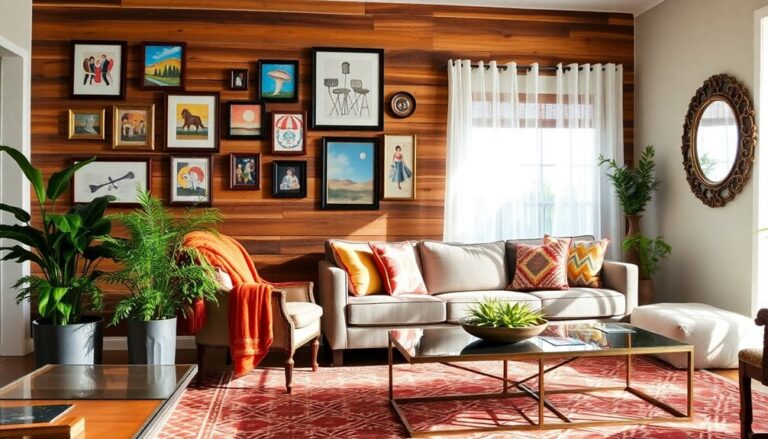

To hang artwork perfectly every time, measure 57 to 60 inches from the floor for eye-level display. Choose a wall space that complements your art’s colors and avoids harsh light. Use sturdy D ring hangers and picture wire for security, and make sure everything’s aligned with a level. Create a balanced gallery wall by varying frame sizes and layouts that reflect your personal style. Follow these tips, and you’ll uncover even more about achieving the ideal display.
Article Highlights
- Measure 57 to 60 inches from the floor to ensure artwork is at eye level for optimal viewer engagement.
- Choose wall space that complements the artwork’s colors and avoids harsh lighting to enhance visibility and prevent fading.
- Use D ring hangers and picture wire for secure hanging, ensuring the artwork stays in place and can be easily adjusted.
- Use a level to align pieces straight, maintaining visual balance and avoiding clutter on gallery walls for a polished look.
- Incorporate personal mementos and cohesive themes to create a narrative that reflects your identity and adds depth to the display.
Understand How to Measure the Perfect Height for Hanging Artwork
With regard to hanging artwork, finding the perfect height is crucial for creating an inviting space. You want your art to connect with everyone who enters, drawing them in and making them feel at home. The ideal art height is typically around eye level, which is about 57 to 60 inches from the floor. This height allows your guests to engage with the pieces naturally, nurturing a sense of belonging. If you’re hanging multiple pieces, try to maintain a consistent height to create a cohesive look. Remember, it’s not just about displaying art; it’s about creating an atmosphere where people feel welcomed. So grab your measuring tape and make sure every piece resonates with those who see it.
Choose the Right Wall Space to Showcase Your Art
Where should you hang your artwork for the best impact? Start by considering your wall color. Lighter shades can help lively pieces pop, whereas darker hues create a striking contrast. Think about how your art interacts with the rest of your space; you want it to feel cohesive and inviting. Next, pay attention to natural light. A wall that receives ample sunlight can amplify the colors and details in your artwork, making it a perfect showcase spot. Conversely, avoid areas with harsh glare or direct sunlight that may fade your pieces over time. In the end, choose a space that reflects your personality, making your art a focal point that welcomes and inspires everyone who enters your home.
Select the Right Hardware for Hanging Artwork
How do you guarantee your artwork stays securely in place? Choosing the right hardware is crucial. For most pieces, D ring hangers are a reliable option. They’re easy to attach and provide sturdy support. Simply install them on the back of your artwork, making sure they’re level.
Pair your D ring hangers with picture wire for added security. This combination allows the artwork to hang evenly and makes it easier to adjust as needed. When you use the right hardware, you’ll create a welcoming space that showcases your personality and style. Remember, a well-hung piece not only improves your home but also nurtures a sense of belonging. Invest in quality hardware, and your art will shine beautifully for years to come.
Make Your Gallery Wall Look Balanced and Inviting
Creating a balanced and inviting gallery wall starts with choosing a cohesive theme that ties your pieces together. Don’t be afraid to vary frame sizes to add visual interest and depth to your display. With these tips, you can transform your wall into an engaging focal point.
Choose a Cohesive Theme
To achieve a balanced and inviting gallery wall, it’s essential to choose a cohesive theme that ties your artwork together. This theme can reflect your personality and create a sense of belonging in your space. Consider the following elements to unify your display:
- Art styles: Mix or match styles like abstract, vintage, or photography for a consistent look.
- Color schemes: Choose a palette that harmonizes your pieces, enhancing their connection.
- Subject matter: Focus on a common theme, such as nature, cityscapes, or personal memories.
- Mood: Decide on an emotional tone, whether it’s calming, lively, or nostalgic, to invite warmth into your home.
Vary Frame Sizes
Though a uniform frame size might seem appealing, varying frame sizes can actually add depth and interest to your gallery wall. Mixing different frame combinations creates an inviting atmosphere that feels personal and curated just for you. Embrace eclectic styles to showcase your unique taste and personality.
Here’s a simple table to inspire your frame selection:
| Frame Size | Style |
|---|---|
| Small | Minimalist |
| Medium | Vintage |
| Large | Bold & Modern |
| Oversized | Artistic Statement |
Illuminate Your Artwork Effectively
Properly illuminating your artwork can greatly elevate its visual impact. When you shine the right light on your pieces, they come to life, inviting admiration and sparking conversations. Consider these lighting techniques to enhance your space:
- Use adjustable spotlights to focus on specific artwork.
- Position lights at a 30-degree angle to avoid glare and shadows.
- Incorporate wall-mounted fixtures for a sleek, modern look.
- Experiment with warm bulbs to create a cozy ambiance.
Ensure Perfect Alignment With a Level
To achieve that flawless look, you’ll want to guarantee your artwork is perfectly aligned using a level. Start by choosing the right level and measuring carefully before you hang anything. Don’t forget to adjust for visual balance, so your art looks just right on the wall.
Choose the Right Level
How can you guarantee your artwork hangs straight and looks professional? Choosing the right level is crucial for achieving perfect alignment. A level not just guarantees that your art placement is spot-on, but it additionally helps create a strong visual focus in your space. Here are some tips to keep in mind when selecting a level:
- Use a torpedo level for smaller pieces to get into tight spaces easily.
- Consider a digital level for precise readings, perfect for gallery-style displays.
- Opt for a standard level for larger artwork, guaranteeing you can see the alignment clearly.
- Always double-check before hanging to avoid any last-minute adjustments.
With the right level, you’ll create an inviting atmosphere that makes your artwork shine.
Measure Before Hanging
After guaranteeing your artwork is level, measuring the space before hanging is key to achieving that polished look. You’ll want to gather your measure tools, like a tape measure or ruler, to guarantee accurate wall spacing. Start by determining where you want your artwork to sit and mark that spot. Then, measure from the floor to the center of the piece. This guarantees it aligns beautifully with the room’s overall aesthetic. Don’t forget to contemplate the spacing between pieces if you’re hanging multiple items; it creates a cohesive gallery feel. By taking these steps, you’ll create an inviting space that feels complete and welcoming, making your home a true reflection of you.
Adjust For Visual Balance
Achieving visual balance in your artwork arrangement is essential for a harmonious look. To make certain your pieces align beautifully, consider these tips:
- Use a level to guarantee straight lines; nothing disrupts balance like a crooked frame.
- Create color contrast by placing bold pieces next to softer ones, drawing the eye and enhancing engagement.
- Maintain proportion balance by mixing large and small artworks; this keeps the arrangement dynamic yet cohesive.
- Step back regularly to evaluate your display; you’ll spot imbalances that aren’t visible up close.
Try Various Layouts to Find What Works Best?
Finding the right layout for your artwork can transform a space, making it feel cohesive and inviting. Don’t hesitate to engage in layout experimentation—this is where the magic happens! Start by arranging your pieces on the floor or using painter’s tape on the wall to visualize different configurations. Experiment with various visual arrangements; you might find that a grid, salon-style, or even asymmetrical layout resonates with you. Trust your instincts and don’t rush the process; it’s all about creating an environment that feels like home. Remember, the goal is to create a space that reflects your personality and brings you joy. By exploring different layouts, you’ll discover what truly works best for your unique space.
Personalize Your Art Display to Reflect Your Unique Style
When you personalize your art display, you not just showcase your favorite pieces but also create a space that truly reflects your unique style. Start by considering your art selection and how it connects to your identity. Here are some tips to improve your display:
- Mix mediums: Combine paintings, photographs, and sculptures for a dynamic feel.
- Color coordination: Choose a palette that resonates with your decor, creating harmony throughout the room.
- Personal mementos: Incorporate items that hold personal significance, making the space feel uniquely yours.
- Layering: Use overlapping frames or canvases to add depth and intrigue.
Frequently Asked Questions
How Do I Choose Artwork That Complements My Room’s Color Scheme?
To choose artwork that truly sings with your room’s color scheme, think of it as a dance of color harmony. You’ll want to explore various art styles, from serene sceneries to bold abstracts, ensuring they echo your palette. Look for pieces that either complement or contrast beautifully with your hues, creating a visual balance. Remember, it’s all about what makes you feel at home and adds that special touch to your space.
Can I Hang Art on Textured or Uneven Walls?
Absolutely, you can hang art on textured or uneven walls! Start by prepping the wall; clean the surface and consider using adhesive strips for a secure hold. For hanging techniques, try using wall anchors or picture hangers that cater to uneven surfaces. You’ll want to make certain your artwork feels balanced and at home in the space. With a little creativity, your art can shine, enhancing the warmth and character of your room!
What Should I Do if My Wall Is Too Small for My Artwork?
If your wall’s too small for your artwork, consider adjusting the art size. You might want to choose smaller pieces or create a gallery wall with multiple smaller artworks to achieve better wall balance. This way, you can improve the space and still express your personality. Don’t be afraid to experiment; it’s all about making your home feel welcoming and uniquely yours. Embrace the challenge, and you’ll find the perfect fit!
How Can I Safely Hang Heavy or Oversized Pieces?
If you’ve got a stunning oversized painting that brings your space to life, you’ll want to hang it securely. Start by locating the wall stud placement; this’ll provide the best support. Use heavy duty anchors if you can’t hit a stud, ensuring your artwork stays safe. For example, a friend hung a large canvas this way and hasn’t had any issues. With the right tools, you can showcase your art beautifully and confidently.
Is It Better to Hang Art in Groups or Individually?
It’s often better to hang art in groups, especially if you want to create a dynamic visual balance. When you arrange multiple pieces together, you can tell a story or highlight a theme, making your space feel more inviting and cohesive. Just guarantee the sizes and styles complement each other. Don’t hesitate to experiment with layouts; it’s all about finding what resonates with you and brings a sense of belonging to your home.