
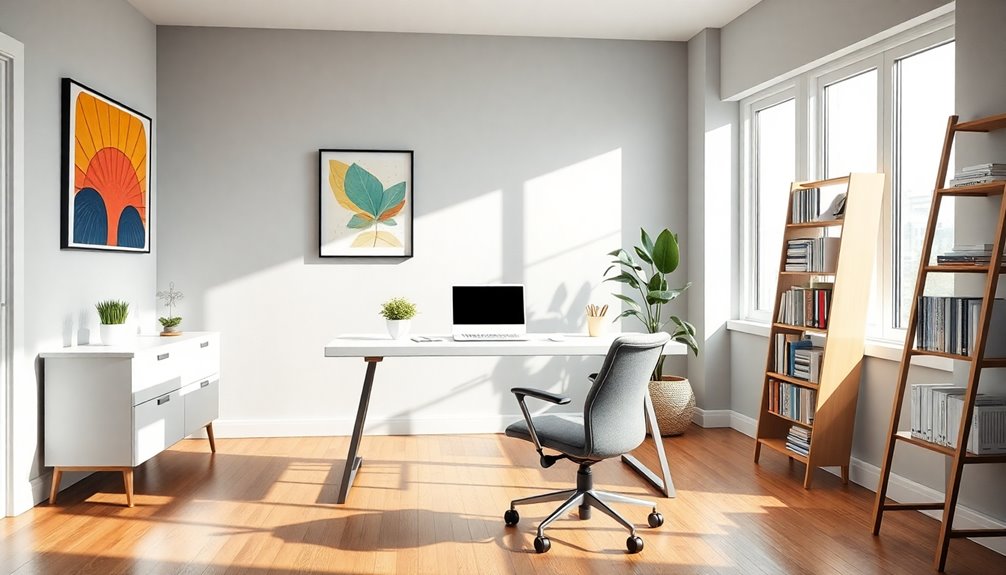
Before remodeling your home office, think about your specific needs, budget, and desired layout. Identify productivity pain points like distractions or poor lighting. Prioritize ergonomics when choosing furniture to keep your health in check. Consider effective lighting and smart tech integration for smooth workflows. Don’t forget to personalize your space to boost your mood. Finally, check if you need permits for any renovations. Keep going to uncover more crucial tips for a successful remodel.
Article Highlights
- Assess your home office needs, focusing on productivity, layout preferences, and potential distractions to create an effective workspace.
- Set a realistic budget that includes furniture, technology, and unexpected expenses to ensure a smooth remodeling process.
- Prioritize ergonomic furniture selection to promote comfort and productivity, supporting proper posture and personal style.
- Incorporate effective lighting solutions and technology integration to enhance workflow and adaptability in your workspace.
- Familiarize yourself with local permits and zoning laws to avoid legal issues and ensure compliance during your home office remodel.
How to Determine if a Home Office Remodel Is Right for You
Have you been feeling unproductive in your current home office setup? If so, it might be time to contemplate a remodel. Think about your home office needs and how they align with your remodeling goals. Are you struggling with distractions, lack of space, or inadequate lighting? Identifying these pain points is vital. You deserve a workspace that inspires creativity and focus, helping you feel connected to your work and your community. A well-designed office can encourage a sense of belonging, making you feel more at home in your space. Reflect on what changes you crave—whether it’s better organization, a fresh design, or updated technology—and take the first step in the direction of a more fulfilling and productive home office environment. Additionally, consider dedicated home office areas that can improve property value and buyer appeal, reflecting the potential for productivity.
Setting Your Home Office Budget: How Much Can You Afford?
Once you’ve identified the needs for your home office remodel, it’s time to figure out how much you can realistically spend. Start with budget planning by evaluating your finances and setting a comfortable limit. Create a cost breakdown that includes furniture, technology, decor, and any renovations. Don’t forget to factor in potential surprises; it’s always wise to set aside a little extra for unexpected expenses. Engaging with community resources can help you find affordable options that fit your style. Remember, a well-planned budget not just keeps you grounded but also brings you closer to creating a space where you truly belong. With a clear budget in mind, you’ll feel empowered to make choices that reflect your personal and professional needs. Additionally, understanding permit requirements can help avoid fines and ensure compliance during renovations.
Best Home Office Layouts for Productivity
When setting up your home office, the layout can make all the difference in your productivity. You’ll want to contemplate whether an open or closed layout works best for you, along with how to create distinct zones for focus and creativity. Each choice impacts your workflow, so let’s explore what might suit your needs best.
Open Vs. Closed Layout
Whether you thrive in a lively environment or prefer a quiet space, choosing between an open or closed layout for your home office can greatly impact your productivity. An open layout benefits collaboration and communication, allowing you to feel connected with others, which can spark creativity and encourage a sense of belonging. Nevertheless, it can lead to distractions that might hinder your focus. Conversely, a closed layout offers privacy and minimizes interruptions, helping you concentrate better on tasks. Yet, closed layouts have drawbacks, such as feeling isolated or cut off from the team dynamic. In the end, consider what fits your work style and needs, as both options have their unique advantages and challenges.
Zoning For Focus Areas
Choosing the right layout for your home office isn’t just about open versus closed spaces; it’s also about zoning for different focus areas to improve your productivity. By implementing effective zoning techniques, you can create distinct focus zones customized to your specific tasks. For instance, consider a quiet corner with soft lighting for deep work, whereas a more collaborative space can encourage creativity and brainstorming.
Utilizing furniture, such as room dividers or strategically placed plants, can help define these areas without closing off your space. Remember, a well-planned home office should feel inviting and supportive of your work style, allowing you to shift smoothly between tasks. Prioritize comfort and functionality to nurture a space where you truly belong.
Prioritizing Ergonomics: Choosing the Right Furniture for Your Health
When setting up your home office, selecting the right furniture is essential for your well-being. You’ll want to take into account chair selection criteria, desk height, and accessories that improve comfort. Making these choices thoughtfully can greatly affect your health and productivity.
Chair Selection Criteria
As you commence on the expedition of remodeling your home office, selecting the right chair is crucial for maintaining your health and productivity. Prioritize ergonomics by considering chair materials and adjustability. A supportive chair can make all the difference in your daily comfort and focus.
Here’s a quick guide to help you choose wisely:
| Criteria | Considerations |
|---|---|
| Chair Materials | Breathable mesh, leather, fabric |
| Chair Adjustability | Height, armrests, lumbar support |
| Comfort Level | Cushioned seating, back support |
| Durability | Warranty, brand reputation |
Desk Height Importance
An ideal desk height is essential for creating a comfortable and productive workspace. You want to make sure your desk allows for proper posture, so your arms can rest comfortably as you type. If your desk is too high or too low, you might experience discomfort or strain, making it hard to focus. Ergonomic adjustments are key here; they help tailor your workspace to fit your body’s needs. Consider using a height-adjustable desk if you share your office with others or enjoy switching between sitting and standing. By prioritizing the right desk height, you not only improve your well-being but additionally cultivate a sense of belonging in your workspace, making it a place where you can truly thrive.
Accessories For Comfort
Finding the right desk height is just the beginning of creating a comfortable workspace. To truly improve your home office, you need to take into account accessories that prioritize your well-being. Invest in a quality ergonomic chair that supports your posture and keeps you comfortable during those long hours. Don’t forget about comfort necessities like a supportive keyboard and mouse pad, which can make a world of difference.
Adding decorative accents, like plants or artwork, creates an inviting atmosphere that reflects your personality and boosts your mood. Personal touches help you feel more connected to your space, nurturing a sense of belonging. By thoughtfully selecting these elements, you’ll create a workspace that not just looks good but likewise feels great to work in.
How to Choose Effective Lighting for Your Workspace
How can you create an inviting and productive workspace with the right lighting? The key is to blend both ambient and task lighting effectively. Here’s how:
- Layer Your Lighting: Use ambient lighting to create a warm atmosphere, like soft overhead fixtures.
- Focus on Task Lighting: Incorporate desk lamps that provide direct light for reading and detailed work, ensuring you avoid eye strain.
- Adjust for Mood: Consider dimmable options to tailor the brightness according to the time of day or your tasks.
Essential Technology for Your Home Office
As you design your home office, incorporating vital technology can greatly improve your productivity and comfort. Start with a reliable computer and high-speed internet connection, ensuring you have smooth access to all your work. Consider integrating smart home devices, like voice-activated assistants and smart lighting, to create a seamless workspace that adapts to your needs. Choosing the right connectivity options, such as a good-quality router and a backup energy source, can prevent disruptions and keep your workflow uninterrupted. Don’t forget ergonomic accessories like a comfortable chair and adjustable desk to support your well-being. By investing in these indispensable technologies, you’ll create an inviting and efficient environment that helps you feel connected and motivated in your work. Additionally, leveraging effective resource distribution maximizes returns on investment and ensures your home office setup is both functional and cost-efficient.
Ways to Add Personal Touches to Your Office
As technology lays the groundwork for a productive home office, personal touches can improve the space to reflect your unique style and inspire creativity. Adding personal decor not just makes your office inviting but also connects you to your inspiration sources. Here are three ways to infuse personality into your workspace:
- Artwork: Hang pieces that resonate with you, whether they’re family photos or inspiring quotes.
- Plants: Incorporate greenery to bring life and a sense of tranquility, improving your mood and productivity.
- Personalized Accessories: Use custom stationery or unique desk organizers that showcase your style.
These elements create an environment that feels welcoming, making it easier for you to settle in and feel a sense of belonging in your office.
Tips for Organizing and Decluttering Your Workspace
Even though personal touches can improve your home office, a clutter-free workspace is essential for maintaining focus and productivity. Implementing effective decluttering strategies can transform your environment. Start by sorting through items, keeping only what you truly need. Streamlining operations through continuous improvement can enhance your overall efficiency.
Here’s a simple organization table to help you:
| Decluttering Strategies | Workspace Organization |
|---|---|
| Sort items into categories | Use labeled storage bins |
| Keep frequently used items within reach | Utilize vertical space |
| Set a cleaning schedule | Designate a ‘hot zone’ for important tasks |
| Let go of distractions | Personalize with purpose |
Planning for Future Flexibility in Your Home Office
When planning your home office, it is crucial to take into account future flexibility, especially since your needs may change over time. An adaptable design can make a world of difference in accommodating those future needs. Here are three ideas to reflect upon:
- Modular Furniture: Choose pieces that can be easily reconfigured or expanded as your requirements evolve.
- Multi-Functional Spaces: Design areas that serve multiple purposes, like a desk that doubles as a meeting space for collaborative projects.
- Flexible Technology: Invest in tech that can grow with you, such as adjustable monitors or versatile energy outlets.
Do You Need Permits for Your Home Office Remodel?
Before you start your home office remodel, it’s essential to check if you need any permits. Local regulations can vary widely, and certain types of projects might require specific approvals. Knowing what’s needed will save you time and potential headaches down the road.
Local Regulations Overview
Comprehending local regulations is crucial when planning your home office remodel, as you may need permits depending on the scope of your project. Ensuring your remodel aligns with zoning laws and building codes not just keeps you compliant but additionally nurtures a sense of community trust. Here are three key points to reflect upon:
- Zoning Laws: Check if your area allows home offices and any restrictions that may apply.
- Building Codes: Familiarize yourself with safety standards for electrical, plumbing, and structural changes.
- Permits: Determine if your specific remodel requires permits, as failing to do so could lead to fines.
Types of Required Permits
Comprehension of local regulations lays the groundwork for your remodeling project, but knowing whether you need permits is equally important. Different permit types may be required based on your remodel’s scope, such as electrical, plumbing, or structural changes. Familiarizing yourself with local building codes can help you avoid costly mistakes and guarantee your home office meets safety standards.
It’s crucial to check with your local authorities to determine which permits apply to your project. This way, you can feel confident moving forward, knowing you’re adhering to the necessary guidelines. Remember, securing the right permits not just protects your investment but also encourages a sense of community and belonging in your neighborhood. Embrace the process, and happy remodeling!
Frequently Asked Questions
How Long Does a Home Office Remodel Typically Take?
A home office remodel typically takes anywhere from a few weeks to a few months, depending on the scope of the project. You should set timeline expectations based on your specific needs and the project’s phases. For instance, planning and design might take a couple of weeks, whereas construction can vary. By comprehending these phases, you can better prepare and feel more at ease throughout the transformation of your workspace.
Should I Hire a Contractor or DIY My Home Office Remodel?
You should consider hiring a contractor if you’re looking for professionalism and efficiency, but DIY has its benefits too! In contrast, contractor costs can add up, you’ll get expert guidance and save time. Conversely, DIY allows for personal touches and can be budget-friendly. Think about your skills and how much time you can commit. In the end, it’s about creating a space that feels like yours, whether you do it yourself or get help.
What Are Common Mistakes to Avoid During a Home Office Remodel?
When remodeling your home office, nearly 70% of people blow their budget because of poor planning. To avoid this, prioritize budget planning right from the start. Keep an eye on workspace ergonomics too; a comfortable setup increases productivity and well-being. Don’t forget to account for lighting and organization, as clutter can stifle creativity. By steering clear of these pitfalls, you’ll create a space that truly feels like yours and improves your work life.
How Can I Maximize Natural Light in My Home Office?
To maximize natural light in your home office, consider using light colors on your walls and furniture; they’ll reflect sunlight beautifully. Choose window treatments that let in as much daylight as possible, like sheer curtains or blinds that can be adjusted. Position your desk near windows to take advantage of the light. You’ll create a bright, inviting space that feels welcoming and energizing, making it a great place to work and thrive.
What Style Trends Are Popular for Home Office Designs?
You know, it’s not just about having a space to work; it’s about creating a vibe. Right now, modern aesthetics are all the rage, blending clean lines with lively accents. Functional layouts that prioritize comfort and efficiency are key, too. You’ll find open shelving, ergonomic furniture, and cozy nooks that invite creativity. By embracing these trends, you’ll craft a home office that feels inviting and inspires productivity, making it a place you truly belong.