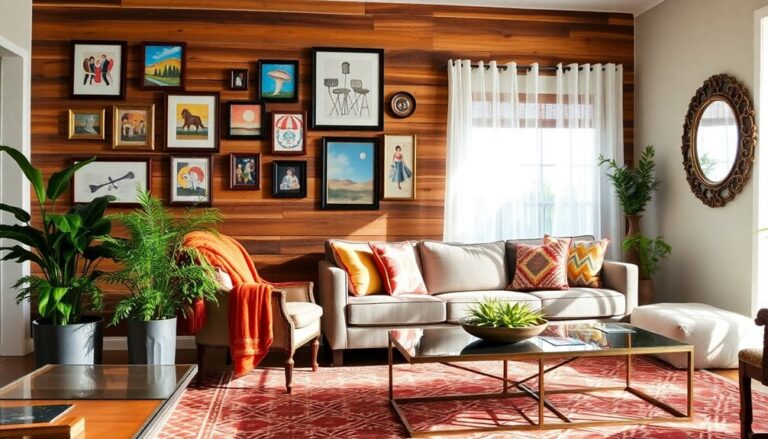

If you want to make small rooms feel larger, focus on light neutrals and cool shades. These colors create an airy feel and reflect light, enhancing spatial perception. A splash of bold color can in addition energize your space, especially for accents. Consider strategic accent walls to add depth without overwhelming. Remember, each color choice impacts your room’s ambiance and your sense of belonging. Discover more tips to optimize your small space through thoughtful color selection.
Article Highlights
- Light neutrals, such as whites and soft beiges, create an illusion of spaciousness in small rooms.
- Cool shades like light blues and greens enhance spatial perception while promoting a calm atmosphere.
- Incorporating subtle patterns and textures can keep the decor interesting without overwhelming the space.
- Strategic use of bold colors for accent walls can add depth and visual interest without closing in the room.
- Reflective surfaces and finishes help light bounce around, further enhancing the airy feel of small spaces.
Why Wall Color Is Crucial for Small Spaces
In regard to small spaces, the right wall color can make all the difference, as it influences how you perceive the room’s size and ambiance. Comprehending color psychology is key; certain hues can evoke feelings of warmth and comfort, making you feel right at home. Lighter colors, for instance, can create an illusion of spaciousness, enhancing your spatial perception and making the room feel less confined. Conversely, darker shades might give a cozy vibe but can likewise make a small space feel even tighter. By choosing the right color, you’re not just decorating; you’re crafting an environment that nurtures belonging and connection. So, consider your options carefully, and let your walls speak to who you are and how you want to feel.
Best Wall Colors for Small Spaces to Create an Airy Feel
In terms of making a small space feel airy, the right wall colors can make all the difference. Light neutrals can open up the room, whereas cool shades improve the sense of space. Don’t forget to add accent colors for depth and character, creating a balanced and inviting atmosphere.
Light Neutrals Work Wonders
Choosing light neutrals for your small room can transform the space, creating an airy and open feel. These soft hues, like creamy whites, pale grays, and sandy beiges, invite warmth and calmness, making you and your guests feel right at home. Pairing these colors with light textures, such as linen or sheer fabrics, improves the sense of spaciousness. Consider adding subtle patterns in your decor—perhaps a delicate wallpaper or patterned throw pillows—to keep the look interesting without overwhelming the senses. This harmonious blend of light neutrals and gentle designs can create a welcoming atmosphere, ensuring that your small room feels both comfortable and expansive, nurturing a sense of belonging for everyone who steps inside.
Cool Shades Enhance Space
Light neutrals set a fantastic foundation for small spaces, but cool shades can take the airy feel to another level. By incorporating cool color palettes like soft blues, gentle greens, or tranquil grays, you can improve space perception and create a serene atmosphere. These colors not only reflect light but also evoke a sense of calm, making your small room feel more open and inviting. When you choose hues that mimic nature, like the sky or ocean, you encourage a sense of belonging and connection. Picture walking into your space and feeling instantly relaxed; it’s all about the right shades. Embrace cool tones, and watch your small room transform into a spacious retreat that you’ll love.
Accent Colors for Depth
As cool shades provide a soothing backdrop, incorporating accent colors can add depth and dimension to your small room. Think about using warm tones like coral or mustard to create a cozy atmosphere that feels inviting. These colors can stimulate energy and connection, thanks to the principles of color psychology. By strategically placing accents—perhaps on a feature wall or in decor—you’ll improve room cohesion, making the space feel more harmonious. Don’t shy away from bold choices; a lively throw pillow or artwork can transform your room, drawing the eye and making it seem larger. In the end, blending these accents with your cool base will help you create a welcoming environment where you and your guests will feel right at home.
The Role of Neutrals in Creating Space Illusions
Even though it might seem tempting to fill a small room with bold colors, opting for neutral shades can actually elevate the sense of space. Neutral colors play a significant role in color psychology and improve spatial perception. They create a calm environment, making your small room feel larger and more inviting.
Consider these benefits of using neutrals:
- Reflective Quality: Light neutrals bounce light around, creating an airy feel.
- Timeless Appeal: Neutrals provide a versatile backdrop that pairs well with various decor styles.
- Cohesive Atmosphere: They promote a sense of belonging, making the space feel unified and harmonious.
When to Use Bold Colors in Small Rooms
While neutrals often work wonders in small spaces, there are moments when bold colors can truly elevate the room’s character. When you’re looking to infuse energy into a small room, consider using bold colors strategically. These hues can evoke feelings of warmth and excitement, thanks to bold color psychology. If your space is meant for social gatherings or relaxation, a lively shade can create an inviting atmosphere that nurtures connection. Think about small room strategies like painting one wall a striking color or incorporating bold accessories. This can draw attention and make the space feel more dynamic without overwhelming it. Embrace the idea that a splash of boldness can improve your small retreat and make it uniquely yours.
Using Accent Walls for Depth
When you want to create the illusion of depth in a small room, using an accent wall can be a game-changer. By employing effective accent wall techniques, you can transform your space, making it feel larger and more inviting. Here are some ideas to help you achieve stunning color contrast effects:
- Bold Colors: Choose a deep hue for your accent wall to draw the eye and create a focal point.
- Horizontal Stripes: Painting horizontal stripes can visually widen the room, enhancing its depth.
- Textured Finishes: Incorporate textures like shiplap or wallpaper to add dimension and interest.
Embracing these techniques can cultivate a sense of belonging in your space, allowing you to truly make it your own.
Tips for Choosing the Right Wall Colors for Your Space
Selecting the appropriate wall colors for your space can greatly influence its overall feel, so it is vital to reflect on a few key factors. Start by considering color psychology; different shades can evoke various emotions. Soft blues and greens often create calmness, whereas warm yellows and oranges can energize. Think about the room ambiance you want to achieve—do you prefer a cozy, inviting atmosphere or something more open and airy? Additionally, take into account the natural light in your space; lighter colors can help small rooms feel larger and brighter. Finally, don’t forget to test samples on your walls first. This way, you’ll guarantee the colors resonate with you, making your space a true reflection of home.
Frequently Asked Questions
How Does Lighting Affect Wall Color Perception in Small Rooms?
Envision stepping into a cozy café, where the sunlight dances through the windows, illuminating the walls. That’s how lighting affects wall color perception in small rooms. Natural light brings out the true hues, making colors appear brighter and more vivid, as you ponder how both types of light interact with your chosen colors to create a welcoming atmosphere.
Can Wall Color Influence Furniture Choices in Small Spaces?
Absolutely, wall color can influence your furniture choices in small spaces! Color psychology plays a big role; softer hues can create a sense of calm, leading you to choose minimalist furniture styles that don’t overwhelm. Conversely, bold colors might inspire you to pick statement pieces that stand out. By thoughtfully coordinating your wall color with your furniture, you can create a cohesive space that feels inviting and uniquely yours, nurturing a sense of belonging.
What Finishes Work Best With Light Wall Colors?
Choosing finishes for light wall colors is like picking the perfect outfit for a sunny day. Matte finishes can create a soft, inviting atmosphere, making a space feel cozy and warm. Conversely, glossy finishes add a touch of modern elegance, reflecting light and giving your room a brighter vibe. In the end, it’s about finding what resonates with you and makes your space feel like home, so embrace what you love!
How Often Should I Repaint Small Rooms for Freshness?
You should consider repainting small rooms every 3 to 5 years to maintain freshness and keep the space feeling inviting. Regular touch-ups can help too, especially in high-traffic areas. If you notice fading or wear, don’t hesitate to refresh those walls sooner. Keeping your room’s color brilliant not just improves your home’s appeal but likewise creates a warm atmosphere where you and your loved ones can feel truly at ease.
Are There Color Combinations to Avoid in Small Spaces?
In terms of small spaces, avoid color combinations like dark hues paired with bright contrasting colors. It’s like trying to fit an elephant in a phone booth—too overwhelming! Instead, stick to softer shades that create harmony. Bold contrasts can make your room feel cramped and chaotic, which isn’t what you want. Embracing light, complementary colors will help your space breathe, making it feel more welcoming and cozy.